What Does a Film Editor Actually Do?
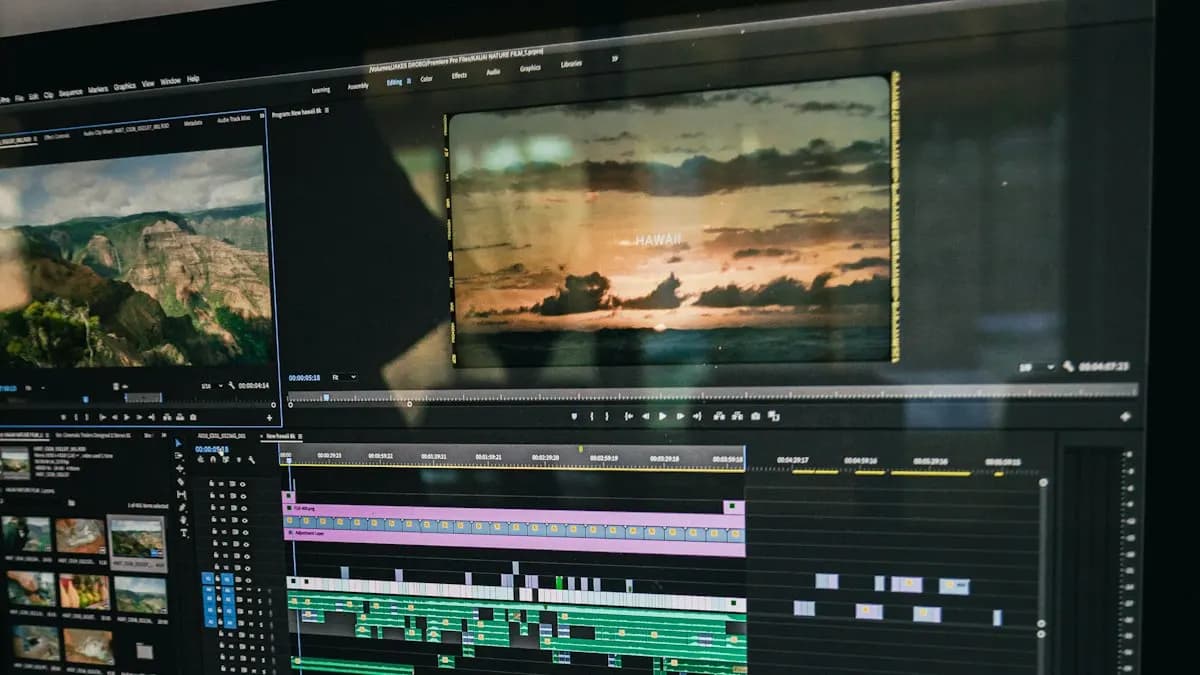
The US Bureau of Labor Statistics describes film and video editors as people who manipulate moving images that entertain or inform an audience, usually working in studios or offices[1]. In practice, a film editor takes hours of footage and decides what the audience sees, in what order and for how long. Editing is where the story is finally written.
| Stage | What the editor does |
|---|---|
| Assembly | Puts the scenes in script order to see the whole film |
| Rough cut | Picks the best takes and trims for story and pace |
| Fine cut | Works shot by shot on rhythm, performance and emotion |
| Picture lock | No more picture changes; the cut goes to sound and colour |
| Turnover and delivery | Sends files to sound, colour and VFX teams, then final outputs |
Our guide to what a video editor does covers the shorter-form version of this job, which is where most film editors begin.
The Real Route: How Most Film Editors Get There
- 1Learn one professional editor well
Premiere Pro appears in most of the editor job posts we read for ads and web content. Learn cutting, trimming, multi-camera, sound and colour, not only effects.
- 2Edit short films and music videos
Find film students, theatre groups and independent musicians who need an editor. Short films teach story; music videos teach rhythm.
- 3Take paid work in ads, YouTube or corporate films
This is where you learn deadlines, client notes and delivery formats. Most film editors spent years here.
- 4Work as an assistant editor on a longer project
Assistant editors organise footage, sync sound, make proxies, keep the project clean and prepare files for the sound and colour teams. It is the best training for long-form work.
- 5Cut your first long piece
A documentary, a web series episode or an independent feature. Your reel and references get you the next one.
You do not need a fixed degree for this path, which our guide to video editor qualification explains in detail.
Why Long-Form Film Work Feels Different
A 30-second ad lives in one project. A film can have hundreds of hours of footage and several editors. Adobe's Productions feature in Premiere exists for this: large projects such as documentaries, films and TV can be broken into reels or episodes, assets are shared between projects without duplicate files and project locking stops one editor overwriting another's work[2].
Adobe also publishes a best practices and workflow guide for long-form and episodic post-production that covers settings, offline dailies, turnovers and final deliverables[3]. If you want to work on films, read it once. Studios expect assistants to understand these words on day one.
Skills and Software Studios Expect
- Story sense: knowing what to cut, not only how to cut.
- Premiere Pro: trimming, multi-camera, proxies, nesting and export. See our Premiere Pro color correction guide for the colour basics editors handle before a colourist steps in.
- Sound: clean dialogue, music edits and levels. Bad sound ruins good pictures.
- After Effects basics: titles, simple clean-ups and graphics.
- File discipline: naming, folders, backups and proxies. On long projects this decides whether you are trusted.
- Other editors: some studios use DaVinci Resolve or Avid. If you know Premiere well, switching is quicker; our DaVinci Resolve for Premiere Pro users guide shows the differences.
Real Job Posts We Read on 18 November 2026
We did not find a feature film editor post on Internshala that day, which is normal: film editors are usually hired through references. These posts show the kind of work that leads there:
- A production company in Mumbai wanted an in-office video editor intern to edit raw footage, audio and graphics into finished videos, with colour correction, sound mixing and effects; skills listed included Premiere Pro, After Effects and DaVinci Resolve[4].
- A studio in Mumbai wanted a video editor with 1 to 2 years of experience in After Effects and Premiere Pro to edit ads, Reels and campaign videos, add music, sound effects and subtitles and create motion graphics[5].
- A films company in Chandigarh wanted an editor with at least a year of experience to edit long-form YouTube videos, Reels and Shorts and create titles, lower thirds and explainers in After Effects, with generative AI tools in the skills list[6].
A Showreel Plan That Gets Replies
- Keep it 60 to 90 seconds. Best work first; editors decide in the first 15 seconds.
- Show story, not effects. Include one dialogue scene cut for emotion.
- Add one music-led piece to show rhythm.
- Show range: one ad, one short film scene, one documentary or interview piece.
- Link full pieces below the reel for anyone who wants more.
Wedding films are a common paid starting point that teaches long-form story and multi-camera work; see our guide to wedding video editing.
AI and Agentic AI in Film Editing
Editors now use Premiere's speech-to-text to search interviews by words, Enhance Speech to clean dialogue, Generative Extend to add a few frames to a shot and AI tools to draft subtitles and rough selects. Some post houses run AI agents that log footage, tag scenes and prepare proxies overnight.
What the human still decides: which take carries the performance, how long to hold a moment and what the film is really about. No tool makes those calls. CABA's courses now teach AI and agentic AI workflows inside the curriculum, with the editor in charge of every cut.
What Video Editors Earn on the Way
| Stage | Pay per month (Delhi NCR) |
|---|---|
| First job | ₹12,000 to ₹15,000 |
| After 1 year | ₹18,000 to ₹22,000 |
| After 2 years | ₹30,000 to ₹35,000 |
Film work pays per project and varies widely, so most editors keep a steady job or regular clients while they build film credits.
Do You Need a Film Editing Course?
You can learn alone, but it takes longer without someone telling you why a cut feels slow. A good video editing course gives you real footage, deadlines, sound and colour basics and a trainer who reviews every edit. Check the full timeline in video editing course duration.
Our video editing course in Delhi is taught one-to-one with Premiere Pro, After Effects, sound and AI video tools through client-style projects and ends with a showreel. It comes with a 100% Job Guarantee; read the job guarantee terms. See the modules on the video editing course page.
Frequently Asked Questions
How do I become a film editor in India without a degree?
Learn a professional editor such as Premiere Pro, build a 60 to 90 second showreel, take paid work in ads, YouTube or corporate films and look for assistant editor work on longer projects. Studios hire on the reel and references.
Which software do film editors use?
Premiere Pro is common in Indian studios for ads and web content. Some studios use DaVinci Resolve or Avid. Learning one well makes switching easier.
What does an assistant film editor do?
Organises and backs up footage, syncs sound, makes proxies, keeps the project tidy and prepares files for the sound, colour and VFX teams.
How long does it take to become a film editor?
You can start paid editing work within a year of focused training. Editing feature films usually comes after several years of smaller projects.
Is film editing a good career?
It can be, if you enjoy story and long hours of detailed work. Most film editors build a steady income from ads, web content and corporate films alongside film projects.
References
- Film and Video Editors and Camera Operators, Occupational Outlook Handbook- U.S. Bureau of Labor Statistics
- About Productions (updated 18 August 2026)- Adobe Premiere Help
- Best practices for film and TV productions (updated 7 January 2026)- Adobe Premiere Help
- Video Editor internship in Mumbai at Triskn (seen 18 November 2026)- Internshala
- Senior Video Editor job in Mumbai at Modicle Studios (seen 18 November 2026)- Internshala
- Video Editor job in Chandigarh at Realeyes Films (seen 18 November 2026)- Internshala